
Everything from industrial presses and manufacturing lines to agricultural machinery and construction equipment is powered by hydraulic systems. Hydraulic hoses, which are flexible yet highly durable parts made to transport pressurized fluid safely and effectively, are the foundation of these systems.
While hydraulic hoses may look simple from the outside, their assembly is a precise process that directly affects system performance, safety, and longevity. Cutting, skiving, and crimping are three crucial processes that combine to turn unreliable, high-pressure hose material into a dependable assembly.
Engineers, manufacturers, and consumers can better understand what makes a hydraulic hose reliable by knowing how these stages work together. We’ll go over each step in-depth in this post and discuss why it’s so important to coordinate them when making hydraulic hoses.
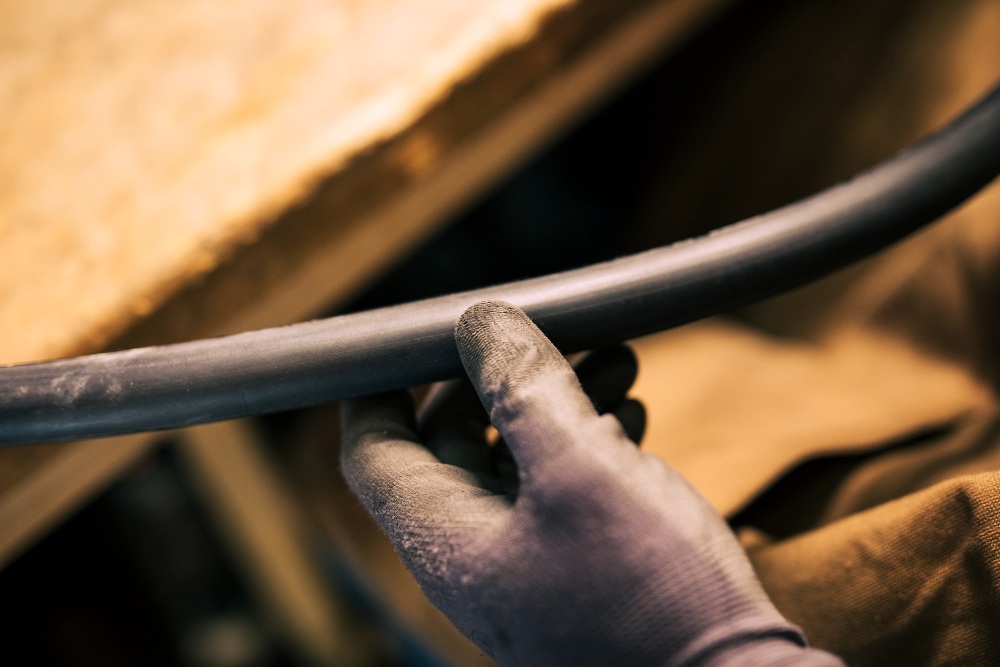
Understanding the Structure of Hydraulic Hoses
Before diving into the assembly process, it’s helpful to understand what hydraulic hoses are made of.
A typical hydraulic hose consists of three layers:
- The inner tube carries the hydraulic fluid. It must resist oil, chemicals, and pressure.
- Reinforcement Layer – Usually braided or spiraled steel wire that provides strength and pressure resistance.
- Outer Cover – Protects against abrasion, weather, and environmental damage.
To connect the hose to a hydraulic system, metal fittings are attached to each end. These fittings must be securely fixed so they can withstand extreme pressure without leaking or detaching. That’s where cutting, skiving, and crimping come into play.
portant to coordinate them when making hydraulic hoses.
Understanding the Structure of Hydraulic Hoses
Step 1: Hose Precision from the Start
Every reliable assembly begins with accurate preparation. The first step in building hydraulic hoses is cutting the hose to the required length using specialized hose-cutting machines.
Why Cutting Matters
Cutting may sound simple, but in hydraulic applications, precision is critical. If a hose is cut unevenly or crushed during cutting, it can lead to:
- Improper fitting insertion
- Weak sealing
- Internal contamination
- Reduced hose life
Professional hose cutting machines are designed specifically for reinforced hoses. They use sharp, high-speed blades that produce clean, straight cuts without fraying the reinforcement wires.
Key Goals of Proper Cutting
- Clean edge – Ensures proper fitting alignment
- Correct length – Prevents stress during installation
- Minimal debris reduces contamination risk inside the hose
Even small particles inside hydraulic hoses can damage pumps and valves. That’s why many manufacturers also clean or blow out hoses after cutting.
Cutting sets the foundation. If it’s done poorly, every step that follows is compromised.
Step 2: Hose Skiving: Preparing for a Secure Bond
Once the hose is cut to size, the next step may involve skiving. Skiving is the process of removing a portion of the hose’s outer cover and sometimes the inner tube to expose the reinforcement layer. This is done using specialized hose skiving machines.
What Is Skiving, Exactly?
In certain high-pressure hydraulic hose designs, fittings are engineered to grip directly onto the reinforcement layer rather than the outer rubber cover. To allow this, the outer layer must be precisely removed.
This process is known as
- External skiving removes the outer cover
- Internal skiving removes part of the inner tube
- Combination skiving removes both layers when required
Why Skiving Is Important
Not all hydraulic hoses require skiving. However, when working with heavy-duty or high-pressure hoses, especially multi-spiral types, skiving ensures:
- Proper metal-to-metal contact between fitting and reinforcement
- Increased pressure resistance
- Reduced risk of fitting blow-off
- Stronger mechanical grip
Hose skiving machines are designed to remove material evenly without damaging the steel reinforcement beneath. Precision is essential. If too much material is removed, the hose weakens. If too little is removed, the fitting may not seat correctly.
In short, skiving prepares the hose for a secure and durable connection.
Step 3: Crimping and Locking It All Together
The final and most critical step in assembling hydraulic hoses is crimping. This is where the fitting is permanently attached to the hose using hose crimping machines.
What Is Crimping?
Crimping is the process of compressing a metal ferrule (a sleeve around the fitting) onto the hose using controlled radial force. The machine squeezes the ferrule tightly so that the fitting becomes mechanically bonded to the hose structure.
Think of it as creating a high-strength lock between the hose and the fitting.
Why Crimping Is Critical
Hydraulic systems operate under extremely high pressures, sometimes exceeding thousands of PSI. If the crimp is not precise, several issues can occur:
- Leaks
- Hose slippage
- Sudden failure under pressure
- Safety hazards
Hose crimping machines are calibrated to apply exact pressure according to hose type, diameter, and fitting specifications. Modern machines often use digital controls to ensure consistent results.
What Makes a Good Crimp?
A properly executed crimp will:
- Meet the manufacturer’s specified crimp diameter
- Provide uniform compression
- Maintain hose flexibility
- Withstand pressure testing
Crimping is the final structural step that ensures hydraulic hoses perform reliably in demanding environments.
How Cutting, Skiving, and Crimping Work Together
Each step in hydraulic hose assembly serves a unique purpose. However, their real strength lies in how they integrate seamlessly.
Let’s look at how they connect:
- Cutting ensures accuracy and cleanliness. Without a clean cut, the fitting won’t align properly.
- Skiving prepares the reinforcement layer for bonding. It allows the fitting to grip directly onto the strongest part of the hose.
- Crimping locks the fitting securely in place. It creates a pressure-resistant, leak-proof connection.
If any one of these steps is skipped or done incorrectly, the integrity of the hydraulic hose assembly is compromised.
For example:
- A poor cut may prevent proper fitting insertion.
- Incorrect skiving may weaken reinforcement.
- Improper crimping may cause failure under pressure.
The process must flow smoothly from one stage to the next.
The Role of Specialized Machines in Ensuring Quality
The reliability of hydraulic hoses depends heavily on the quality of equipment used in their assembly.
- Hose cutting machines ensure clean, accurate preparation.
- Hose skiving machines provide controlled material removal without damaging reinforcement.
- Hose crimping machines deliver precise compression according to manufacturer standards.
Using the correct machinery reduces human error and ensures repeatability, which is especially important in industrial manufacturing, where consistency is critical.
Modern workshops often integrate these machines into streamlined production lines, improving efficiency while maintaining quality control.
Why This Process Is Critical in Hydraulic Hose Manufacturing
Hydraulic systems operate in high-pressure, high-stress environments. Failure is not just inconvenient; it can be dangerous and costly.
Properly assembled hydraulic hoses ensure:
- Leak-free performance
- High pressure tolerance
- Long service life
- Operational safety
- Reduced downtime
Manufacturers who prioritize precise cutting, accurate skiving, and controlled crimping produce hose assemblies that meet industry standards and customer expectations.
In industries like construction, mining, oil and gas, and heavy equipment manufacturing, reliability is non-negotiable. The integrity of hydraulic hoses directly affects system efficiency and worker safety.
Conclusion
Hydraulic hose assembly is more than just attaching fittings to flexible tubing. It is a structured, technical process where cutting, skiving, and crimping work in careful coordination.
- Cutting provides a clean and accurate foundation.
- Skiving prepares the hose for a secure mechanical bond.
- Crimping permanently locks the fitting in place.
Combined, these steps convert raw materials into long-lasting, high-performance hydraulic hoses designed to withstand extreme pressures and challenging applications.
Whether you are an engineer, manufacturer, or equipment supplier, understanding this integrated process highlights why precision matters at every stage. In hydraulic systems, strength starts long before the machine is powered on; it begins with how the hose is assembled.